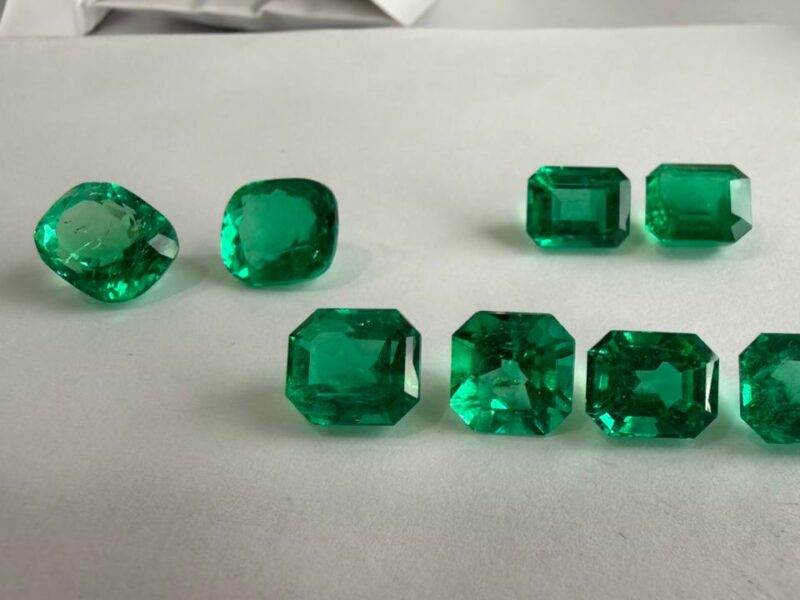
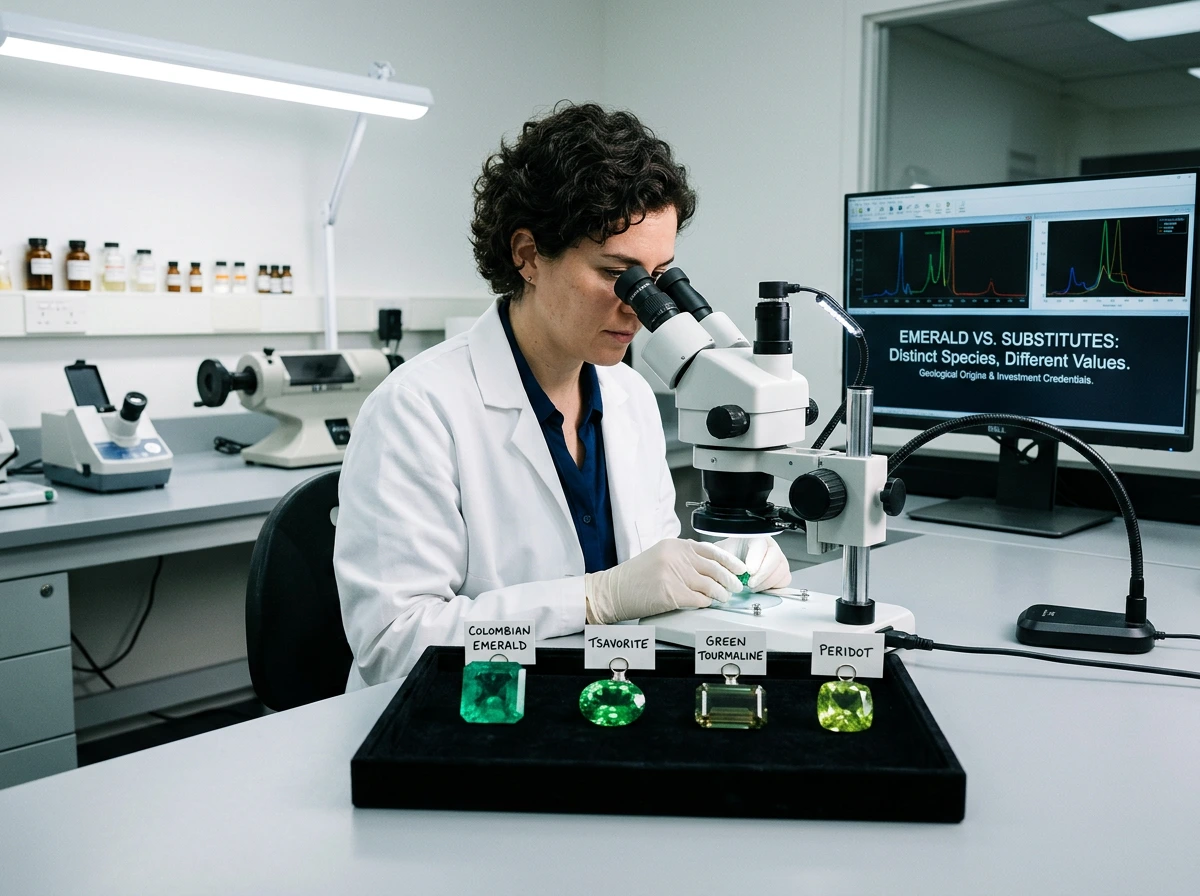
Tsavorite, tourmaline, and peridot are not substitutes for fine Colombian emerald. They are different mineral species, with different geological stories, different commercial histories, and fundamentally different investment credentials. Understanding why requires understanding what each stone actually is.
Every green gemstone gets compared to emerald at some point. Tsavorite garnet is described as “like emerald but cleaner.” Green tourmaline is presented as “just as beautiful for a fraction of the price.” Peridot is positioned as “emerald’s more affordable cousin.” These comparisons are made in good faith by sellers and buyers alike — and they are fundamentally wrong in a way that matters commercially.
The green gemstones that compete visually with emerald are beautiful, legitimate, and in some cases extraordinarily valuable objects. But they are not substitutes for fine Colombian emerald in any context where quality, rarity, investment potential, or long-term value matter. Understanding why requires understanding what each stone actually is — and why the conditions that produce a fine Colombian emerald have no equivalent in the natural world.
The Green Gemstone Landscape
Before comparing, it is useful to understand which green gemstones actually compete for the same buyer attention:
| Stone | Mineral Species | Colorant | Key Source |
|---|---|---|---|
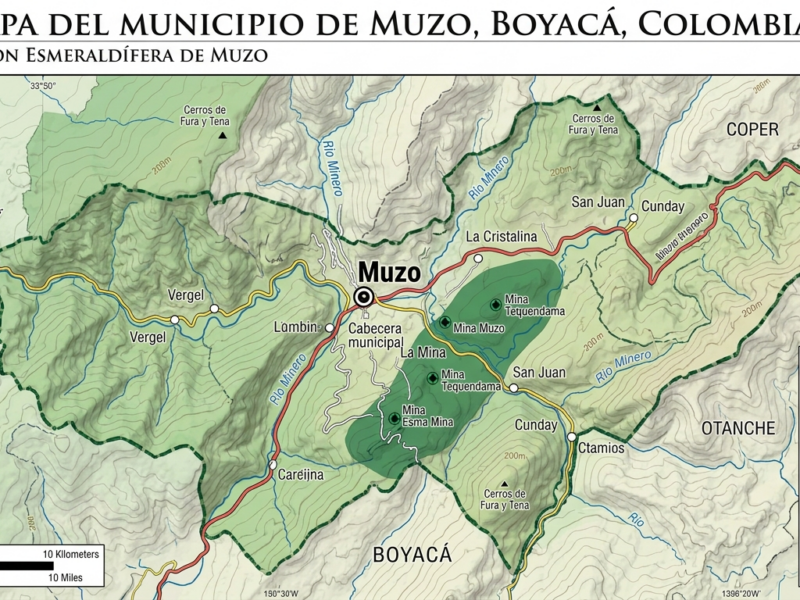
| Colombian Emerald | Beryl | Chromium + Vanadium | Muzo, Chivor, Coscuez |
| Tsavorite Garnet | Grossular Garnet | Vanadium + Chromium | Tanzania, Kenya |
| Green Tourmaline | Tourmaline (complex) | Iron / Chromium | Tanzania, Kenya, Brazil |
| Peridot | Olivine | Iron | Pakistan, Myanmar |
| Green Sapphire | Corundum | Iron + Titanium | Sri Lanka, Madagascar |
| Demantoid Garnet | Andradite Garnet | Iron + Chromium | Russia, Namibia |
Tsavorite Garnet
Tsavorite is the closest visual competitor to fine emerald in the commercial market. A fine tsavorite has a vivid, slightly yellowish-green color with exceptional brilliance and high natural clarity — typically far cleaner than comparable emeralds. Its refractive index is higher than emerald, which means it bends light more dramatically and can appear more brilliant face-up.
Beautiful, durable (hardness 7-7.5), typically untreated, and available in fine quality from Tanzania and Kenya. Fine tsavorite over 3 carats is genuinely rare — the mines produce smaller crystals as a norm — and the finest examples command strong prices on their own terms.
The commercial history, investment market, and cultural significance that attach to Colombian emerald have no tsavorite equivalent. Tsavorite was discovered in 1967. Colombian emeralds have been traded at the highest levels of civilisation for over 500 years. The auction market for investment-grade tsavorite is thin compared to top Colombian material.
Green Tourmaline
Green tourmaline encompasses a wide range of stones, from pale mint material of low value to chrome tourmaline — a variety colored by chromium from Tanzania and Kenya — which can achieve the most vivid, saturated greens in the tourmaline family.
Fine chrome tourmaline is a genuinely beautiful stone, and chromium-colored material can approach the saturation level of a moderate-quality Colombian emerald. But tourmaline’s market positioning is entirely different — it is a colored stone in the fashion and aesthetic category, not the investment and heritage category. The world’s auction houses do not dedicate significant specialist marketing effort to tourmaline the way they do to Colombian emerald.
Paraiba tourmaline — an electric blue-green variety from Brazil containing copper, extraordinarily rare and commercially significant — is sometimes mentioned in this context, but it is a completely different market with its own separate premium logic and should not be conflated with standard green tourmaline comparisons.
Peridot
Peridot is iron-colored olivine, and it is beautiful in a way that is entirely its own: a warm, slightly golden green that evokes summer fields rather than jungle depths. Fine peridot from Pakistan’s Suppat Valley is a legitimate collector’s stone, and Burmese peridot commands strong prices among specialists.
The comparison to emerald is superficial — the color character is so different that a serious buyer would not confuse them. Peridot is a beautiful, affordable, historically important gemstone (ancient Egyptians called it the gem of the sun) with strong appeal to collectors and aesthetic buyers, but without the investment credentials of fine Colombian emerald.
Why the Comparison Is Not Fair — Three Reasons
| 01 |
Rarity is genuinely incomparable
The geological conditions that produce fine Colombian emerald — the alignment of beryllium and chromium in a sedimentary formation environment, over 65 million years — are more specific and less commonly met than any other major colored gemstone. Tsavorite, tourmaline, and peridot all form in geological environments that are more common and less geologically improbable than the Colombian formation. |
| 02 |
The cultural and historical premium
Colombian emeralds have been among the most prized objects of human adornment for over 500 years. They appear in the Spanish colonial records of the 16th century, in Mughal imperial jewelry, in the great European royal collections, and at the apex of the modern auction market. This cultural history is not separable from the stones themselves — it is part of what they are. Tsavorite was discovered in 1967. |
| 03 |
The investment market differential
The auction record for fine Colombian no-oil emeralds is extensive, multi-decade, and shows a consistent upward trajectory for top material. Christie’s, Sotheby’s, and Bonhams have specialist departments dedicated to Colombian emeralds. The depth of the investment market — the number of serious buyers at the top end — for Colombian material is significantly greater than for any competing green gemstone. |
What This Means for Buyers
The green alternatives are not without value. Fine tsavorite, chrome tourmaline, and paraiba tourmaline are beautiful and can be strong additions to a collection that values aesthetic diversity. But they should be purchased on their own terms — as what they are, not as substitutes for something else.
A buyer who cannot afford fine Colombian emerald should not buy green tourmaline as a consolation emerald. They should either save for the quality of Colombian material they want, or buy the tourmaline as what it is — a different, beautiful object with its own merits — with clear understanding that the two are not commercially or investment-logically interchangeable.
Frequently Asked Questions
Is tsavorite a good alternative to emerald?
Tsavorite is an excellent stone on its own terms — vivid, clean, durable, and typically untreated. It is not, however, a substitute for Colombian emerald in any investment or heritage context. The two stones have different geological origins, different cultural histories, and operate in different commercial markets. Buy tsavorite because you want tsavorite; do not buy it as a replacement for something else.
Why is Colombian emerald more valuable than other green stones?
Three converging factors: geological rarity (the formation conditions are uniquely improbable), cultural and historical significance (500 years of documented trade at the highest levels of civilization), and a deep, liquid investment market with a proven multi-decade price trajectory at major auction houses. No other green gemstone combines all three.
Is green tourmaline worth buying?
Yes — on its own terms. Fine chrome tourmaline from Tanzania is a genuinely beautiful stone with strong aesthetic appeal. It should be purchased as a colored gemstone in the fashion and collection category, not as an investment-grade alternative to Colombian emerald. The two objects are simply not comparable in commercial logic, regardless of visual similarity.
What makes Colombian emerald unique compared to other origins?
The Colombian formation environment produces emeralds with consistently high chromium content and a warm, vivid green that no other origin reliably replicates. Beyond color, Colombian origin carries a documented provenance premium at auction — the same stone with Colombian origin certification commands measurably higher prices than equivalent material from Zambia or Brazil. Origin is not just geography; it is a component of value.