A Mine That Predates the Word “Colombia”
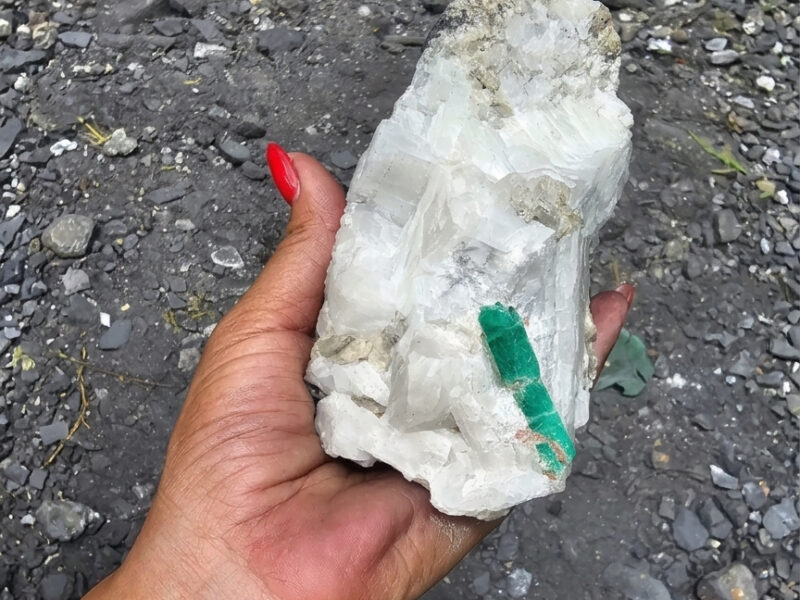
The people who first mined this ground weren’t looking for a gemstone to sell. The Muisca and the Muzo were a distinct, fiercely independent people. The Spanish would later name the region after them. They had worked these deposits for centuries before a European ever set foot in the Andes. Emeralds moved through indigenous trade networks that stretched across the continent. The value had nothing to do with the market price we now attach to carats and clarity grades.
That distinction matters, because it means Muzo’s emerald history didn’t begin with an act of discovery. It began with an act of taking.
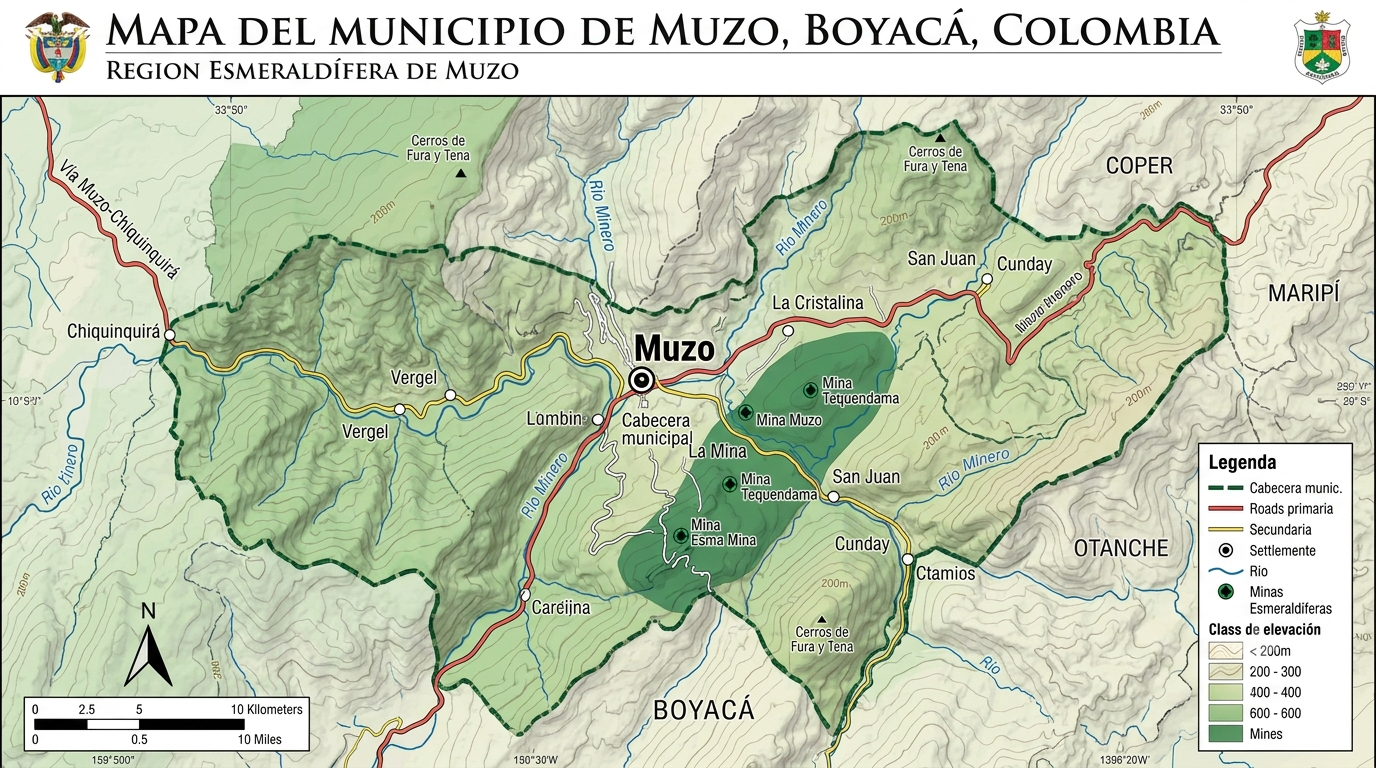
The Boyacá highlands, roughly 200 km north of Bogotá — terrain that made this region hard to reach and, for a long time, harder to conquer.
Four Failed Expeditions and a Secret Worth Keeping
When Spanish conquistadors pushed into the region in the 1530s, they were chasing gold. It was the same fever that drove expeditions across the whole continent. What they found instead was different: emerald of a quality Europe had never seen, in the possession of the people they were fighting. Captain Luis Lanchero led an expedition into Muzo territory in 1538. It failed. So did the ones that followed in 1545, 1550, and 1551. The Muzo people knew exactly what the Spanish were after. For years, they simply refused to give up the location of the source.
Conquest, and What Came After
It took until 1558 for Spanish forces to finally locate and take control of the mines. The Muzo had worked them for generations. By 1560, the Spanish had founded a colonial town on the site: Villa de la Santíssima Trinidad de los Muzos. It came complete with a church and the administrative apparatus of occupation. What followed was decades of forced indigenous labor. Workers extracted emeralds bound for the Spanish crown and European royalty. Some, through remarkably far-reaching trade routes, even reached Mughal rulers in India. The human cost was severe. Eventually Philip III of Spain issued a royal decree intended to protect the surviving indigenous population. It came only after the worst of the damage had already been done.
Independence, and a Slow Drift Toward Chaos
When Colombia won independence in 1819, ownership of the Muzo mines passed from the Spanish crown to the new nation. In practice, “national ownership” meant decades of the mines shifting between public control and private lease. Sometimes Colombian operators held them; sometimes European ones did. For the first time, emeralds began moving directly from Muzo to the jewel houses of Paris and London. They no longer had to pass exclusively through Spain. But formal state control over such a remote, mountainous region stayed thin. Alongside the licensed operations, informal independent miners, known as guaqueros, worked the margins of these deposits for generations. They sifted through mine tailings and unofficial digs for whatever they could find.
That informal economy was legalized in 1953. But legal status didn’t come with a functioning system for resolving disputes. Miners and mine-owning families were largely left to settle conflicts over territory themselves.
The Green Wars
What followed is the darkest chapter of this history, and the most widely known. We’re not going to soften it. Beginning in the 1960s and escalating through the 1980s, rival mining families fought for control of the region’s most productive ground. By the mid-1980s, drug trafficking money and organizations had become entangled with the conflict too. The draw was the same thing that had always drawn outsiders here: a resource worth fighting over, in a place remote enough that the fighting could go largely unchecked. Estimates of the death toll from this period, commonly called the Green Wars, run into the thousands.
The Peace, and What Came After It
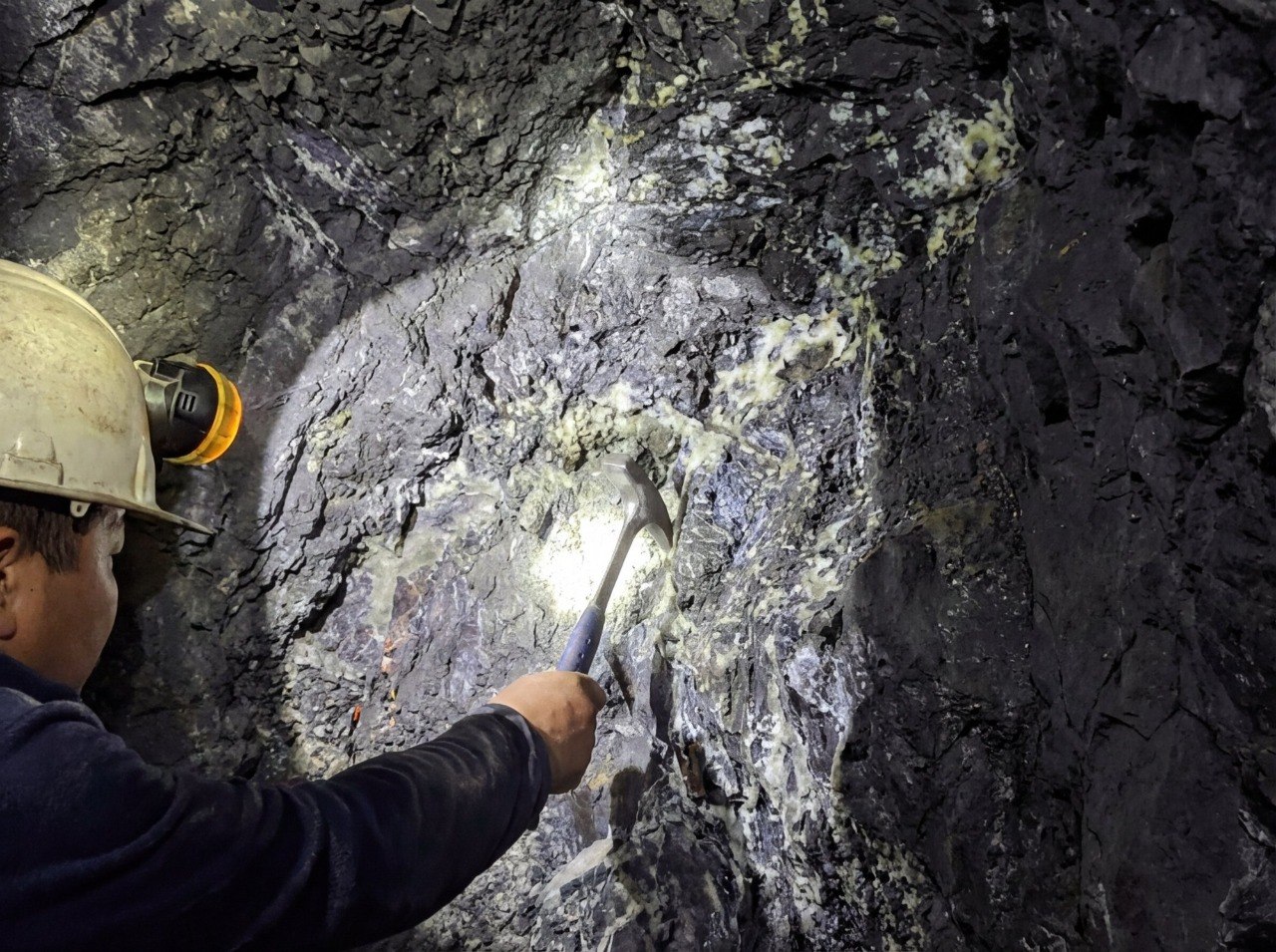
It ended, in large part, through the intervention of the Catholic Church. In 1991, the surviving leaders of the region’s mining families signed a peace accord. Colombian bishops mediated it, with civil and military authorities present as witnesses. It held. The decades since have seen a genuine, if gradual, shift toward formalization. Modern mining companies now operate with employment contracts, safety standards, and community investment in a region that spent much of the 20th century defined by the opposite of all three.
What This History Actually Means for the Stone in Your Hand
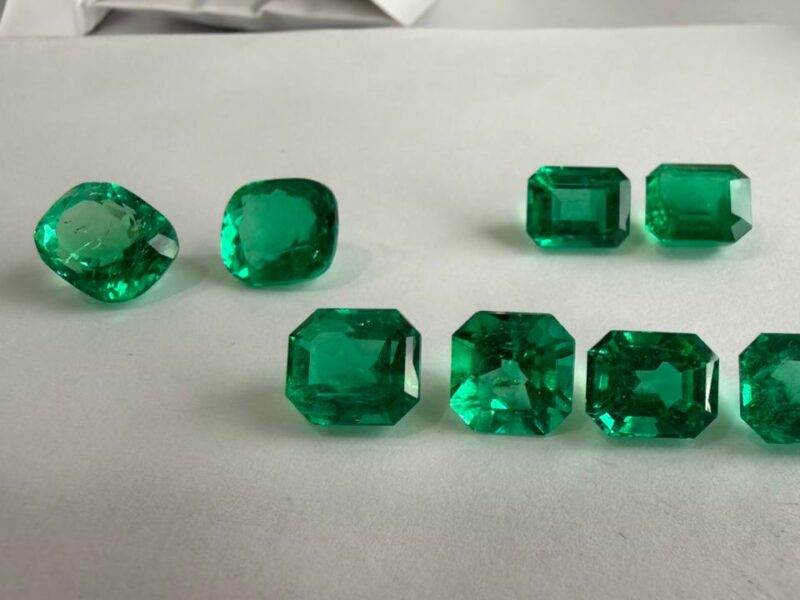
We’re telling you this because a certificate that just says “Muzo, Colombia” flattens five centuries into two words. We don’t think that’s honest. When you’re evaluating a Muzo emerald, you’re weighing its color, its jardin, its cut. You’re not evaluating an abstract mineral specimen. You’re looking at the product of a specific place with a specific, complicated, still-unfolding history worked first by people who understood it long before anyone called it valuable.
This is also, practically, why direct sourcing and real documentation matter to us beyond the certification paperwork. A stone with a properly traced chain of custody isn’t just a compliance requirement. It’s a way of actually knowing which part of this long, difficult history the stone in front of you came from. It’s how we buy from operations that are part of the region’s genuine formalization, rather than its unresolved past.
Common Questions
Who mined Muzo before the Spanish arrived?
The Muisca and Muzo peoples worked these emerald deposits for centuries before European contact. They traded the stones through indigenous networks that extended well beyond present-day Colombia.
What were the “Green Wars”?
A period of violent conflict over control of Colombia’s emerald mines, escalating through the 1980s and ending with a 1991 peace accord mediated by the Catholic Church. It’s a real and serious part of the region’s history one the industry has spent the decades since actively moving away from.
Is Muzo mining still informal or dangerous today?
The industry has shifted substantially toward formal operations since the 1991 peace accord, especially over the past decade. Licensed employment, safety standards, and traceable supply chains are now the norm among established operators. This is best confirmed per source, which is exactly what direct partnership and certification documentation are for.