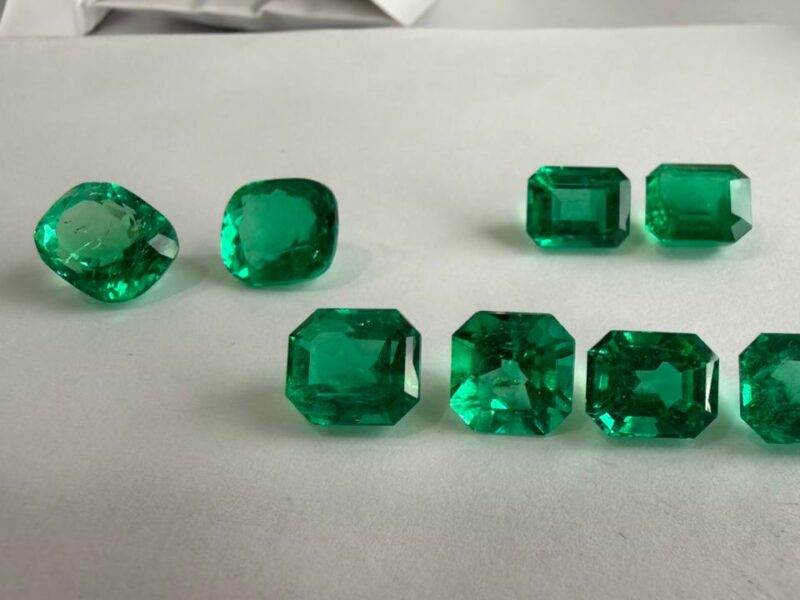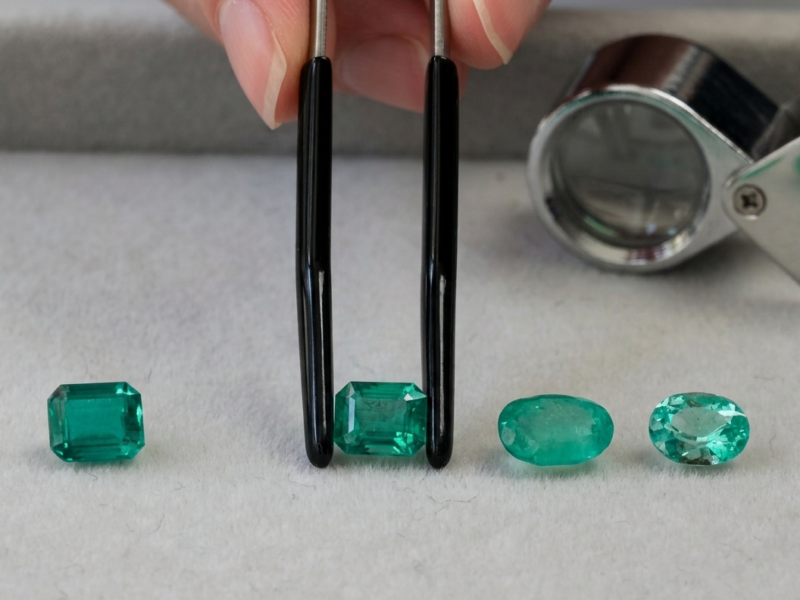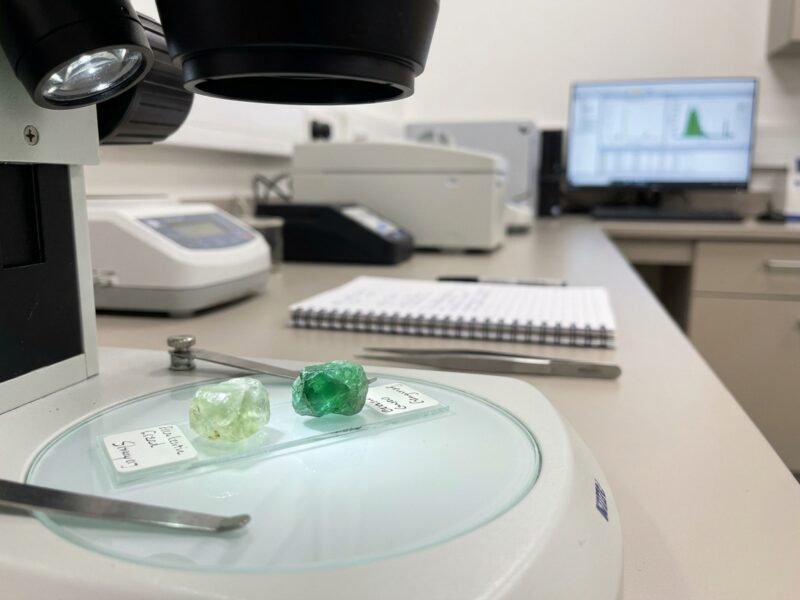
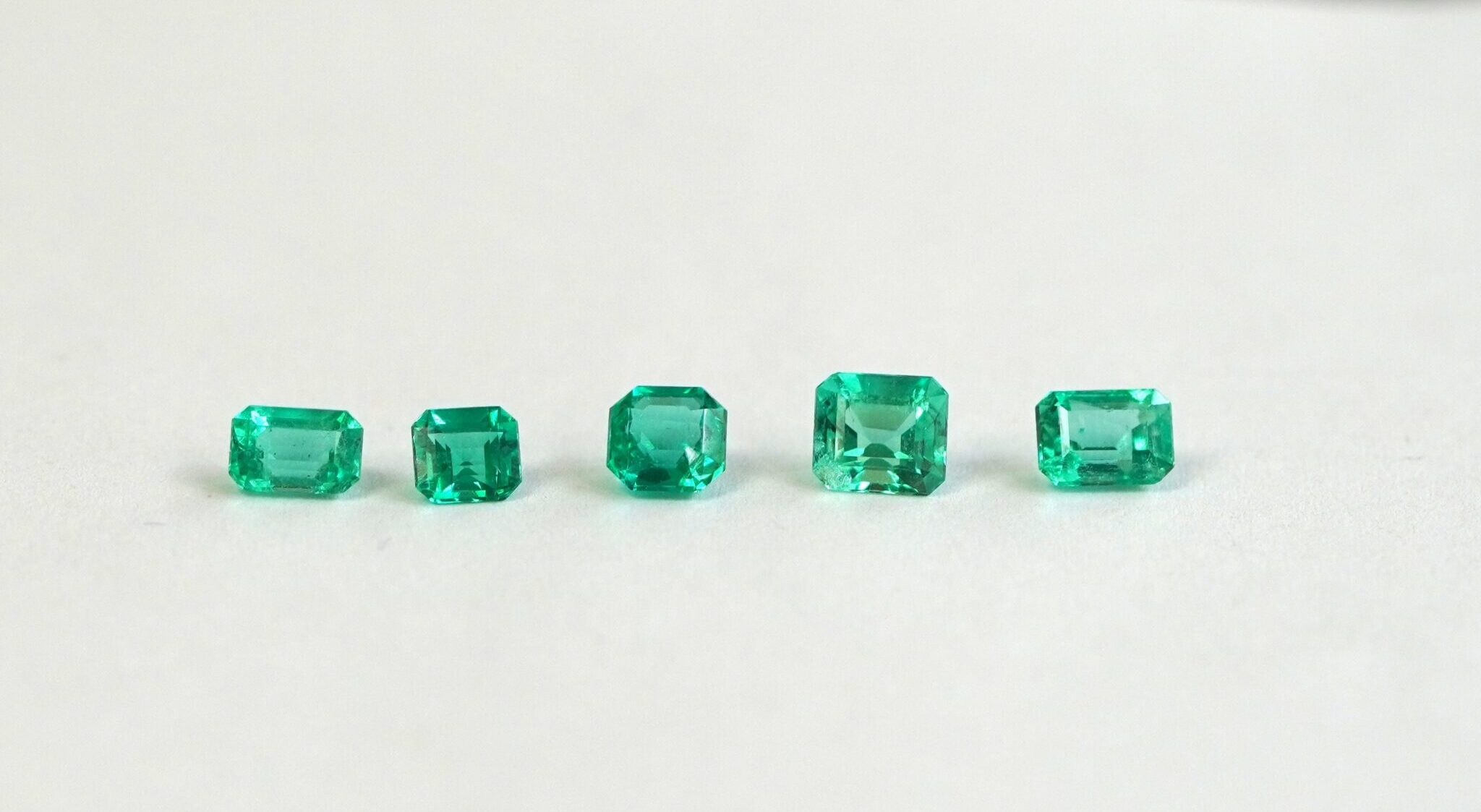
A high quality emerald and a commercial emerald can look similar in a photograph, but they differ on every axis that matters at the point of sale: colour saturation, transparency, the visibility and density of inclusions, the level of treatment used to mask them, and whether origin is certified or simply asserted. A commercial emerald is not a fake — it is a real stone that falls short on one or several of these factors. Knowing where it falls short is what separates a confident buyer from one who is paying fine-emerald prices for a good-enough stone.
“Commercial grade” is not an insult in the gemstone trade — it is a legitimate, widely sold category that makes up the majority of the emerald market. The confusion happens when commercial stones are priced or presented as though they belong in the fine or investment-grade tier. The two categories are separated by measurable, certifiable characteristics, not by marketing language.
This guide walks through each factor side by side, in the order buyers should check them, so the difference is visible before a purchase rather than after one.
Colour — Vivid Saturation Versus Flat Green
Colour is where the two categories separate first and most decisively. A high quality emerald carries a vivid to strong saturation — a green that reads as intense and pure, with no grey or brown muddying it. A commercial emerald is still recognisably green, but the saturation sits in the moderate-to-weak range: the colour is present without being vivid, often with a visible grey or yellowish undertone that dulls it under normal light.
Tone follows a similar pattern. Fine material sits in a medium to medium-dark range that stays luminous. Commercial stones more often drift to the extremes — either too light, where the green looks washed out and closer to a pale mint, or too dark, where the stone looks blackish and its internal colour becomes difficult to read except in strong light.
Two emeralds of identical carat weight and identical origin can differ five to ten times in price on saturation alone. Colour is the single factor that most reliably separates the two categories at a glance — and the one most easily disguised by studio lighting and photo editing.
The safest test is not a photograph. It is viewing the stone in neutral daylight, unmounted if possible, against a white background. Colour that looks vivid only under warm shop lighting or a ring-light is a signal to look closer, not a confirmation of quality.
Transparency and Clarity — Luminous Versus Cloudy
Every natural emerald contains inclusions — the jardin is not itself a defect, and its presence is expected at every quality level. What separates a high quality stone from a commercial one is how the inclusions sit within the crystal and what they do to the passage of light.
A high quality emerald is eye-clean: at normal viewing distance, in normal light, no inclusion interrupts the flow of colour across the stone. Light moves through it and the green appears to come from within. A commercial emerald typically shows inclusions visible to the unaided eye — fractures, feathers, or a denser jardin that breaks up the transparency and gives the stone a slightly cloudy, less luminous appearance, even when the underlying colour is decent.
Hold the stone at arm’s length in daylight. If a fracture, a whitish veil, or a cluster of inclusions is immediately visible without magnification, the stone is very likely commercial grade regardless of how good the colour looks up close. Fine material passes this test without effort.
This is also the point where structural risk enters the picture. A commercial stone with prominent surface-reaching fractures is more fragile in daily wear, which is one more reason the same visual defect carries a compounding price penalty — it affects both beauty and durability.
Treatment Level — How Much Is Being Hidden
Nearly all emeralds are treated with colourless oil or resin to fill surface-reaching fractures and improve apparent clarity. Minor treatment is standard practice across both categories and is not, by itself, a mark of low quality. The difference between high quality and commercial stones is the degree of treatment required to make the stone presentable.
A high quality emerald typically needs only minor oiling, if any, because its natural clarity is already strong. A commercial emerald more often carries moderate to significant treatment — sometimes with resin or hardened fillers rather than traditional oil — because heavier treatment is what makes an included, fractured stone look acceptable to the naked eye. The visual result can be similar to a lightly treated fine stone; the certificate is what reveals the difference.
| Treatment Level | Typically Found In | Market Impact |
|---|---|---|
| None / Minor | High quality material | No meaningful price penalty; premium at “no oil” |
| Moderate | Mid-market and commercial stones | Meaningful price reduction |
| Significant / Resin-filled | Lower commercial grade | Substantial reduction; durability concerns over time |
Always ask for the treatment designation before comparing two stones on price. A commercial emerald with significant resin filling and a high quality emerald with minor oil can look nearly identical in a photograph — the certificate is the only reliable way to tell them apart.
Origin — Certified Versus Asserted
High quality emeralds, particularly those marketed at fine or investment grade, are usually accompanied by a laboratory certificate from GIA, Gubelin, or GRS confirming geographic origin — most commonly Colombian, and specifically the Muzo or Chivor regions for the finest material. This certification is based on the internal geological signature of the stone, not on paperwork supplied by the seller.
Commercial emeralds are frequently sold without independent origin certification, or with origin simply stated by the seller rather than confirmed by a laboratory. This does not necessarily mean the stated origin is false — it means it has not been independently verified, which matters if the stone is ever resold, appraised, or insured.
A stone is not “certified Colombian” because a seller says it came from Colombia. It is certified Colombian because GIA, Gubelin, or GRS has analysed it and confirmed the geological signature of the Eastern Andes formation environment. Commercial-grade stones are frequently sold without this step — which is one of the ways their price stays lower.
Colombian, Zambian, and Brazilian emeralds can all fall into either category. A Zambian stone with vivid saturation, good transparency, and minor treatment is a high quality emerald. A Colombian stone with weak saturation and heavy fracture-filling is a commercial one, regardless of its country of origin. Origin certification confirms provenance; it does not by itself confirm quality tier.
High Quality Versus Commercial — Side by Side
Laid out together, the two categories separate along every factor a buyer can actually check before purchase.
| Factor | High Quality Emerald | Commercial Emerald |
|---|---|---|
| Colour | Vivid to strong saturation, clean Colombian-range green | Moderate to weak saturation, grey or yellowish undertone |
| Transparency | Luminous; light travels freely through the stone | Flatter, occasionally cloudy or hazy |
| Clarity | Eye-clean at normal viewing distance | Inclusions visible to the naked eye |
| Treatment | None to minor oil | Moderate to significant, sometimes resin-filled |
| Origin Documentation | Lab-certified (GIA, Gubelin, or GRS) | Often uncertified or seller-stated only |
| Typical Price Position | Premium; investment-grade at the top end | Accessible; entry-level jewellery pricing |
Neither category is a wrong purchase. A commercial emerald honestly priced and honestly described is a legitimate way to own a natural emerald. The problem is only ever a mismatch — a commercial stone sold at a fine-grade price, or a fine-grade price paid without the certificate to support it.
Frequently Asked Questions
Is a commercial emerald a fake or synthetic emerald?
No. “Commercial grade” describes a real, natural emerald that falls in the moderate range on colour, clarity, or both. It is a legitimate market category, distinct from synthetic or lab-grown emeralds, which are a separate classification entirely and should always be disclosed as such on any certificate.
Can a commercial emerald still be a good purchase?
Yes, provided it is priced and described honestly. Commercial-grade stones make attractive, affordable jewellery pieces. The issue only arises when a commercial stone is marketed with fine-grade language — “vivid,” “investment-grade,” “Colombian premium” — without the certification to support those claims.
What is the single fastest way to tell the two apart?
View the stone unmounted, in neutral daylight, at arm’s length. If the colour reads as vivid and the stone stays eye-clean at that distance, it is very likely fine material. If inclusions are immediately visible or the colour looks grey or washed out outside of studio lighting, it is very likely commercial grade.
Does a Colombian origin certificate guarantee high quality?
No. Origin and quality are separate axes. A certified Colombian stone can still carry weak saturation or heavy treatment and sit in the commercial category. The certificate confirms where the stone formed, not where it ranks on colour, clarity, or treatment.
Why do two similar-looking emeralds sell for such different prices?
Because the differences that drive price — precise saturation, internal transparency, treatment level, and certified origin — are frequently invisible in a photograph and only become clear in person or on a laboratory certificate. Two stones that look alike on a screen can differ by several multiples in price once those factors are checked individually.