The “Four Cs” framework was built for diamonds, where color is mostly about the absence of it the whiter, the better. Applied directly to emeralds, that framework breaks in useful ways. Emerald grading actually inverts several of the diamond rules. Nowhere does that cause more confusion than color and carat. Let’s take all four properly.
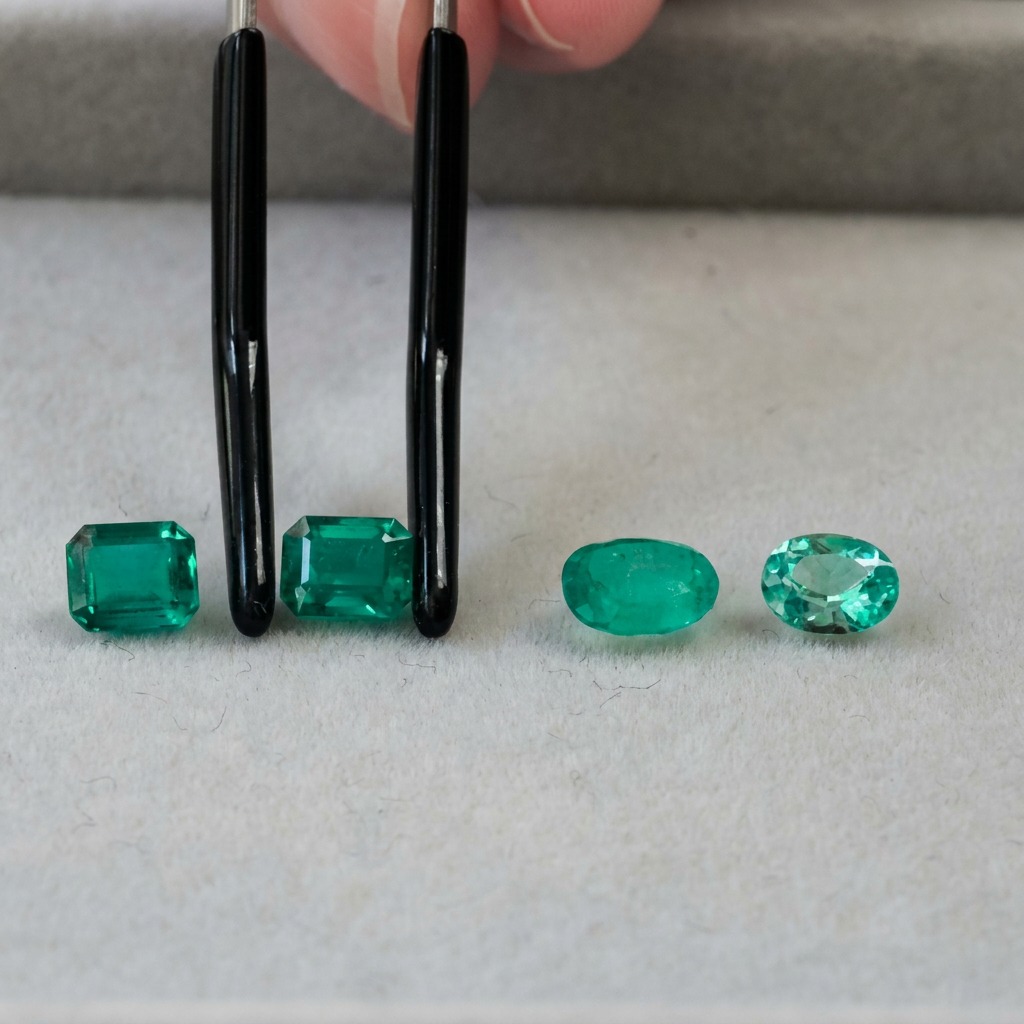
Color: Not One Thing, Three Things
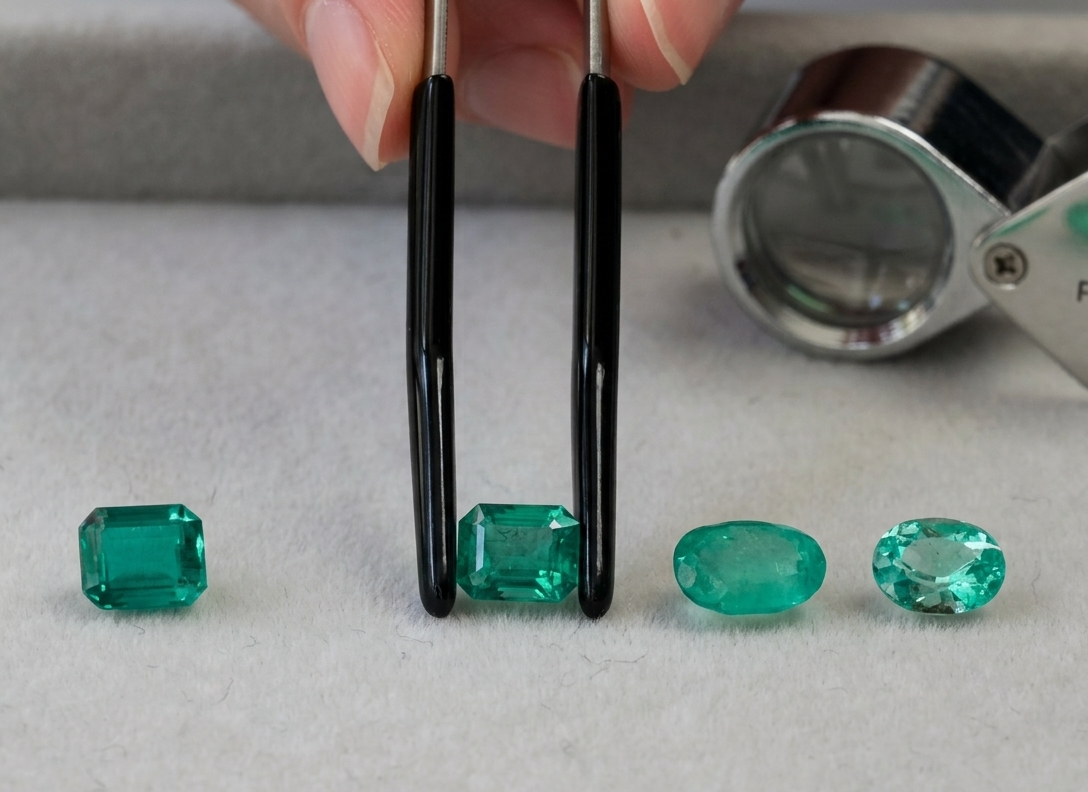
“Green” tells you almost nothing about an emerald’s value. Gemologists actually break color down into three separate dimensions. A stone’s final assessment is the combination of all three, not any one of them alone.
Which family of green. Fine Colombian emeralds sit somewhere between pure green and blue-green, with a slightly bluish cast generally considered most desirable. Too far toward yellow-green and it starts reading as a different stone entirely.
How light or dark the color is, independent of the hue itself. Too pale and the stone looks washed out and weak. Too dark and it starts looking almost black in low light, losing brilliance. The sweet spot is medium to medium-dark.
How vivid or muted the color is how much gray dilutes it. This is often the single biggest driver of price at a given hue and tone. Two stones can share the same green with wildly different intensity, and the vivid one commands a real premium.
A stone described in the trade as “vivid, slightly bluish-green, medium-dark tone” is naming a specific point on all three axes at once. It’s not just saying “nice green.” When you’re comparing two emeralds, ask which of these three is actually different between them. It’s rarely all three. Usually it’s one, and that one determines most of the price gap.
Clarity: Read the Jardin, Not a Diamond Standard
Diamond clarity grading assumes a “loupe clean” ideal is achievable and desirable. That standard doesn’t transfer to emeralds. As covered in depth in our article on the jardin, internal texture is close to universal in genuine Colombian stones. Clarity grading for emeralds really asks two questions. Is the stone eye-clean from a normal viewing distance? Do the inclusions compromise transparency or structural integrity, rather than simply being present? A stone can carry visible internal character under magnification and still grade very well that’s the honest baseline for this specific gem.
Cut: Negotiated With the Rough, Not Chosen Freely
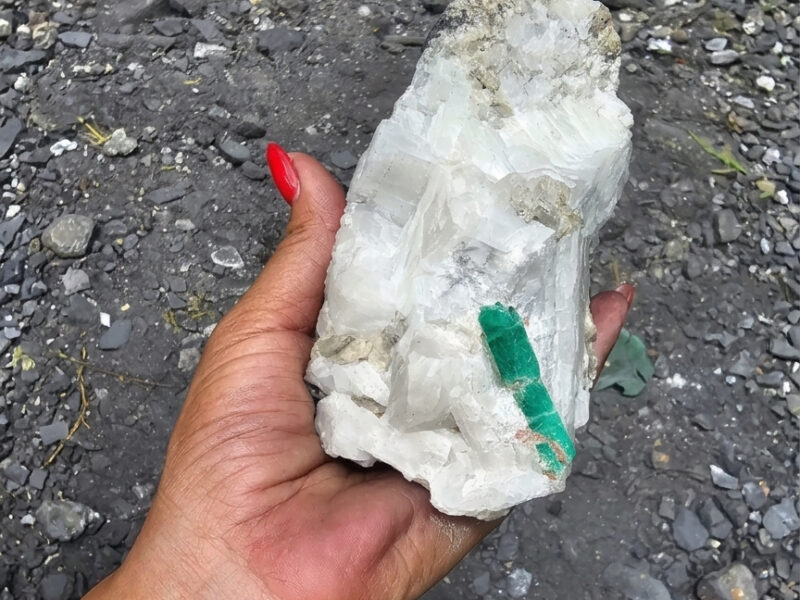
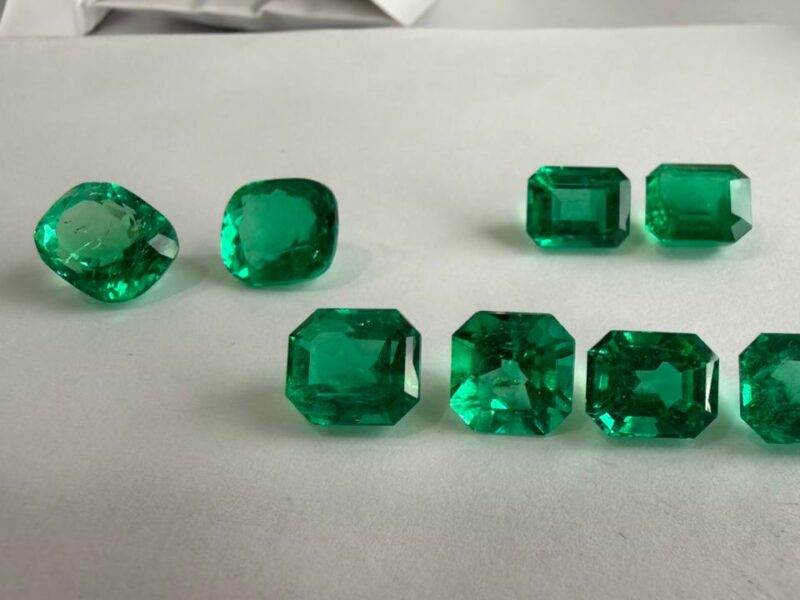
We cover this in detail in our formation article, but here’s the short version: an emerald’s cut isn’t a stylistic preference imposed on the stone. The rough crystal’s natural hexagonal shape, its color zoning, and the location of its inclusions all constrain what shape a cutter can realistically produce. The goal is avoiding excessive weight loss or an unacceptable risk of chipping. The prevalence of the step-cut “emerald cut” comes specifically from that shape’s ability to distribute stress evenly across a structurally more fragile stone than diamond.
Carat: It’s a Weight, and That Distinction Actually Matters
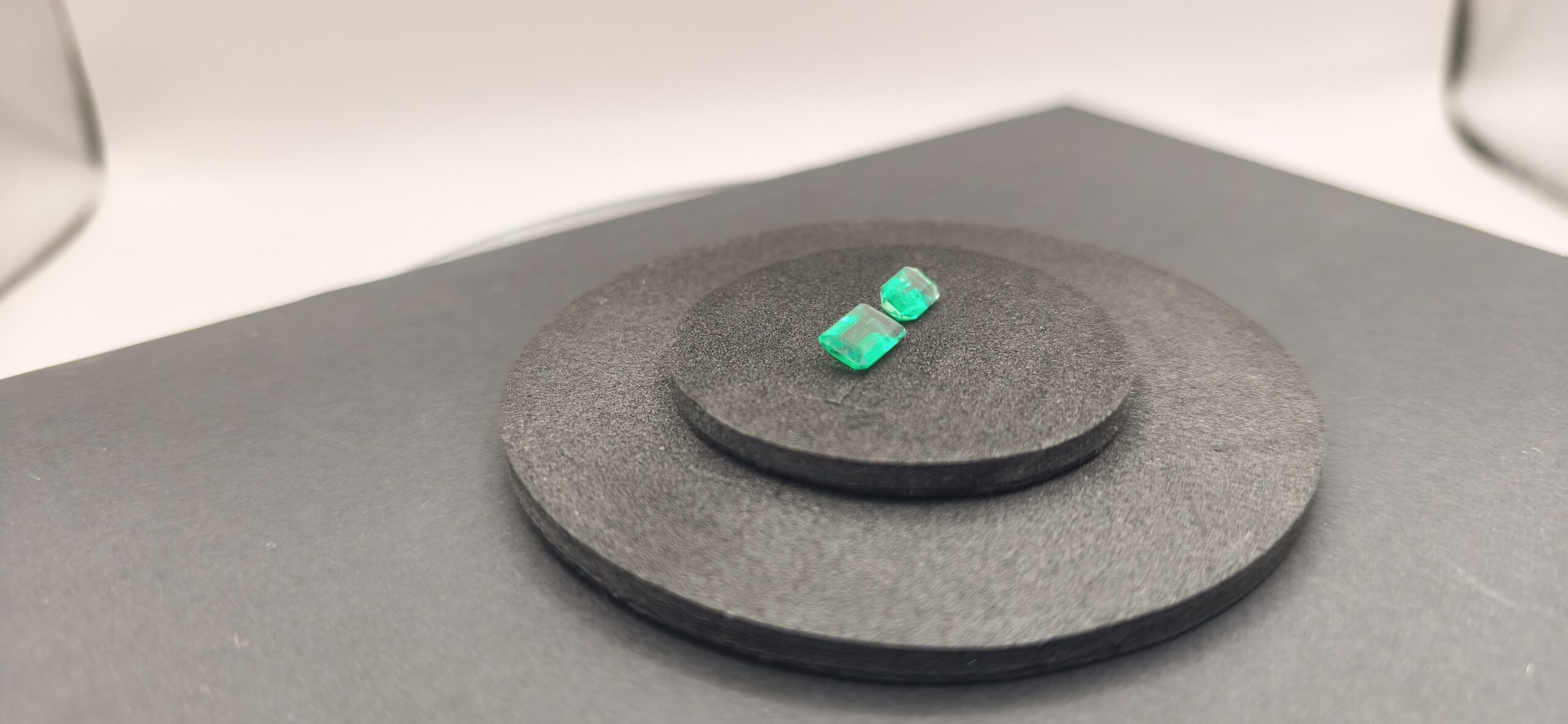
This is the most misunderstood C, so worth being direct about it: a carat is a unit of weight (0.2 grams), not a unit of size. People use “carat” colloquially to mean “how big does it look.” But those two things can genuinely diverge, for reasons entirely within a cutter’s control.
Two Reasons Weight and Size Diverge
Two 1-carat emeralds can look noticeably different in size face-up, for two real reasons. First, density: emerald is less dense than diamond. A given weight of emerald simply occupies more physical volume than the same weight of diamond. A 1-carat emerald already looks larger face-up than a 1-carat diamond, purely because of the material itself. Second, and more important for comparing emerald to emerald: cut proportions. A shallow-cut stone spreads its weight closer to the surface, appearing larger from above for its weight. A deep-cut stone concentrates weight in the pavilion, below the surface. That adds carats to the certificate without adding anything visible once the stone is set in a ring. A cutter choosing a deeper cut to preserve weight from a challenging rough crystal will produce a technically heavier stone that looks smaller than a shallower-cut stone of lesser weight.
The practical takeaway: if visible size matters to you as much as the number on the certificate, ask for the stone’s measured dimensions — length, width, and depth — not just its carat weight. Two stones with the same carat figure are not interchangeable. This is exactly the kind of detail that gets lost when a buyer works from a spec sheet rather than the actual stone.
Common Questions
What’s the most important of the four Cs for emerald value?
Color, and specifically saturation, typically drives the largest swings in price at a given size. Two similarly sized stones with different color intensity can vary substantially in value.
Can two emeralds with the same carat weight look different sizes?
Yes, often noticeably so. Cut proportions determine how much of the stone’s weight is visible face-up versus hidden in the pavilion’s depth. Carat weight alone doesn’t tell you how large a stone will actually look when worn.
Does emerald clarity grading work the same way as diamond clarity?
No. Emeralds are graded against an “eye-clean and structurally sound” standard, not a loupe-clean ideal. That’s because internal inclusions, the jardin, are a near-universal, natural feature of genuine Colombian stones.